
Data Backup & Disaster Recovery · Los Angeles
Your backup matters only if you can recover.
STG helps Los Angeles businesses protect critical data, verify backup health, and build practical recovery plans for hardware failure, human error, cyber incidents, and disruptive outages.
★★★★★ 5.0 on Google100+ reviews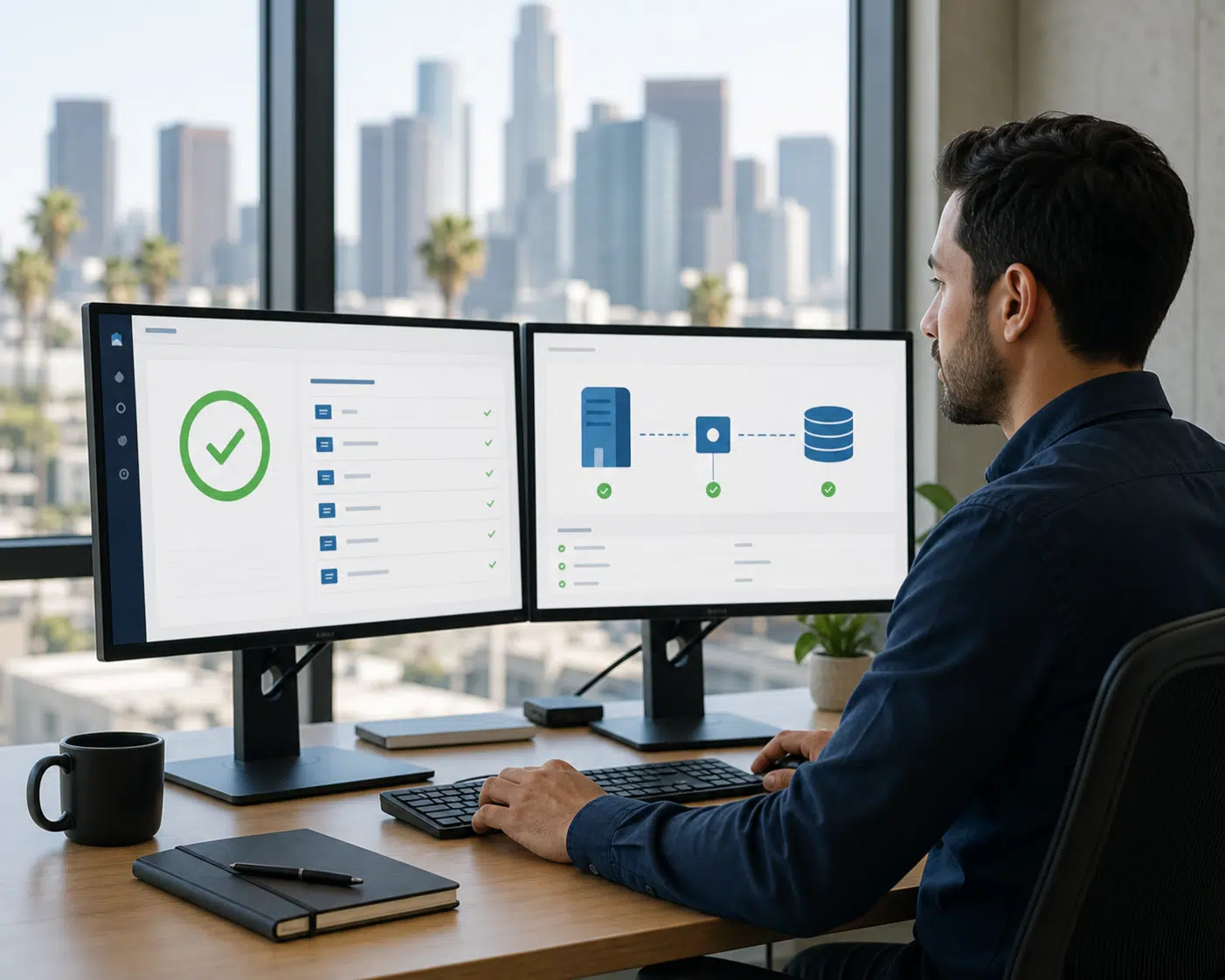
Protection status confirmed
✓ Backup completed✓ Off-site copy confirmed✓ Restore point available
Founded in 200917+ years of experience
Managed protectionBackup health monitored
Los Angeles-basedLocal team in West Hollywood
Recovery planningBuilt around business priorities
The direct answer
What are backup and disaster recovery?
Backup creates protected copies of data and systems. Disaster recovery defines how technology will be restored—and in what order—after a serious disruption.
A backup is a resource. Disaster recovery is the tested process that turns that resource into resumed operations.
Protection is not the same as recovery.
Data backupCopies, retention, encryption, storage locations, job monitoring, and restore points.
Disaster recoveryPriorities, dependencies, recovery objectives, responsibilities, testing, and coordinated restoration.
Business continuity is the broader plan for keeping essential work moving while technology, people, facilities, or vendors are disrupted.
What STG helps protect
Data protection matched to how your business works.
The right approach depends on where your data lives, how quickly it changes, and what the business cannot operate without.
Servers & workloads
Supported physical servers, virtual machines, applications, configurations, and business data.
Cloud & Microsoft 365
Protection strategies for supported cloud services, mail, files, collaboration data, and identities.
Endpoints & files
Business-critical files and supported devices based on risk, workflow, and recovery requirements.
Secure backup copies
Encryption, access controls, retention, and appropriate separation from production systems.
Backup monitoring
Review of job status and exceptions so a silent failure does not remain unnoticed.
Recovery testing
Restore validation and documented exercises appropriate to the environment and service plan.
Recovery objectives
How much data and downtime can the business tolerate?
Those two questions shape architecture, backup frequency, recovery methods, cost, and expectations.
RPORecovery Point Objective
The maximum acceptable amount of recent data that could be lost, measured backward from an incident. It helps determine how frequently protection must occur.
RTORecovery Time Objective
The target time for restoring a system or business function. It helps determine recovery priorities, technology, and staffing requirements.
RPO and RTO are planning targets—not universal guarantees. STG works with stakeholders to set realistic objectives based on business impact, technical dependencies, and the selected solution.
From backup to resumed operations
A recovery path people can follow.
When an incident occurs, clarity matters as much as technology.
01 · AssessConfirm the event, scope, safety considerations, affected systems, and available restore points.
02 · PrioritizeSequence recovery around critical business functions and technical dependencies.
03 · RestoreRecover approved systems and data using the appropriate documented method.
04 · ValidateConfirm integrity, access, functionality, and the remaining steps before normal operations resume.

Why managed recovery matters
A successful job notification is only one part of readiness.
STG connects backup configuration, monitoring, documentation, testing, and recovery planning. That reduces the gap between believing data is protected and knowing how recovery should proceed.
We also help identify dependencies that are easy to miss: identity systems, network access, licensing, cloud applications, vendors, and the people authorized to make recovery decisions.
Specialized expertise
Technology solutions built for the industries we know best.
While we support businesses across nearly every industry, we have developed deep expertise in three sectors where technology plays a critical role.
Architecture, Engineering & Construction
Technology built for firms managing large project files, CAD workflows, field teams, and secure collaboration between the office and job site.
Explore A/E/C IT Services →Entertainment & Media
Supporting studios, agencies, production companies, and post-production teams with high-performance storage, collaboration, and dependable IT.
Explore Entertainment IT →Financial Services
Helping investment firms and financial professionals stay secure, compliant, and productive with proactive IT and layered cybersecurity.
Explore Financial IT →Don’t see your industry?
A large portion of the businesses we support are growing organizations just like yours. We work across the broader SMB space, including professional services, healthcare, nonprofits, manufacturing, retail, legal, and marketing agencies.
Frequently asked questions
Backup and disaster recovery FAQs
Is cloud storage the same as backup?
Not necessarily. File synchronization and cloud storage improve access, but they may also synchronize deletions or unwanted changes. A backup strategy adds managed copies, retention, recovery controls, and monitoring appropriate to the risk.
How often should business data be backed up?
Frequency should be based on the amount of data the business can acceptably lose, how quickly data changes, application capabilities, compliance obligations, and budget. This is expressed through the Recovery Point Objective.
How quickly can STG restore our data?
Recovery time varies by incident, data volume, platform, dependencies, connectivity, solution design, and the agreed Recovery Time Objective. A responsible plan defines targets and priorities rather than promising one universal restore time.
Are backups protected from ransomware?
Backups can materially improve recovery from ransomware, but protection depends on architecture, access controls, isolation or immutability features, retention, monitoring, and testing. Backup is one layer of a broader security strategy.
Does STG test backups?
STG can incorporate restore validation and recovery exercises based on the environment and managed service plan. Testing scope and frequency should match system criticality and business requirements.
What is the difference between disaster recovery and business continuity?
Disaster recovery focuses on restoring technology and data. Business continuity is broader: it addresses how essential operations continue across disruptions involving systems, facilities, people, vendors, and communications.
Build confidence before an incident
Know what is protected—and how it comes back.
Let’s review your critical systems, backup coverage, recovery priorities, and the gaps between your current setup and the resilience your business needs.